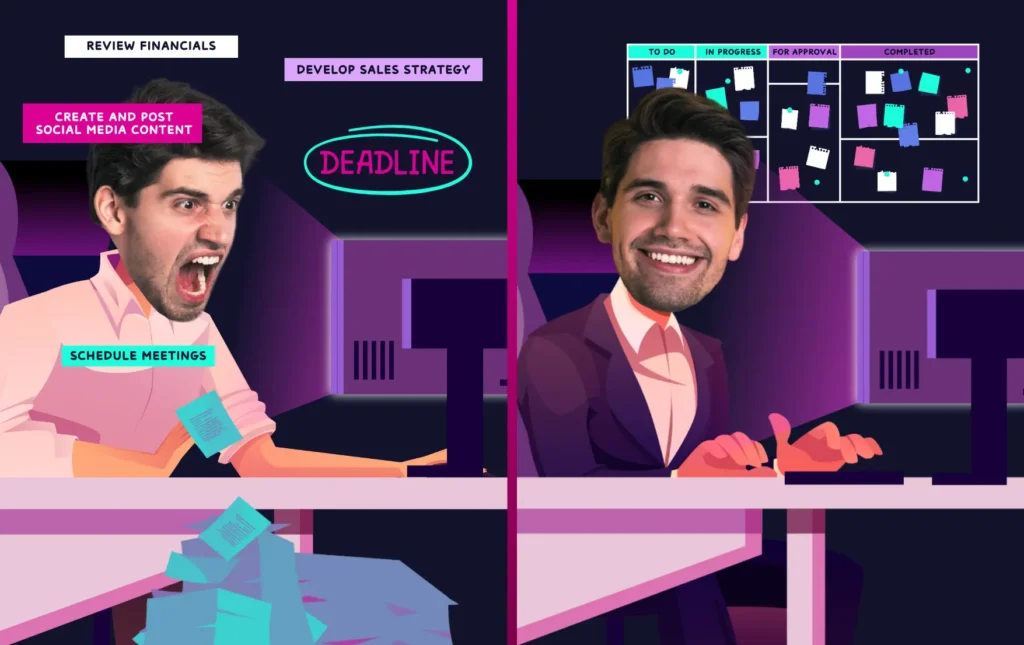
You don’t need more hours in the day—you need fewer distractions stealing your focus. For founders, the real problem isn’t deep work; it’s the constant interruptions and context switching.
Switching between inboxes, design approvals, scheduling, and “quick check-ins” feels productive, but it drains your mental energy. The American Psychological Association reports that context switching can cut productivity by up to 40%.¹
The good news? With the right system, much of what derails your day can be delegated, batched, or redirected.
Why Distractions Are Killing Your Focus (and How to Stop Them)
Distractions rarely appear as distractions. They often look like “productive” work:
- Choosing easy wins over high-value projects
- Responding to urgent—but not important—emails
- Tackling small admin tasks during deep work time
- Spinning off into new ideas instead of finishing current work
- Answering unfiltered team pings or VA questions
While none of these are bad on their own, together they create constant workplace distractions and force your brain to reset. And every reset costs focus.
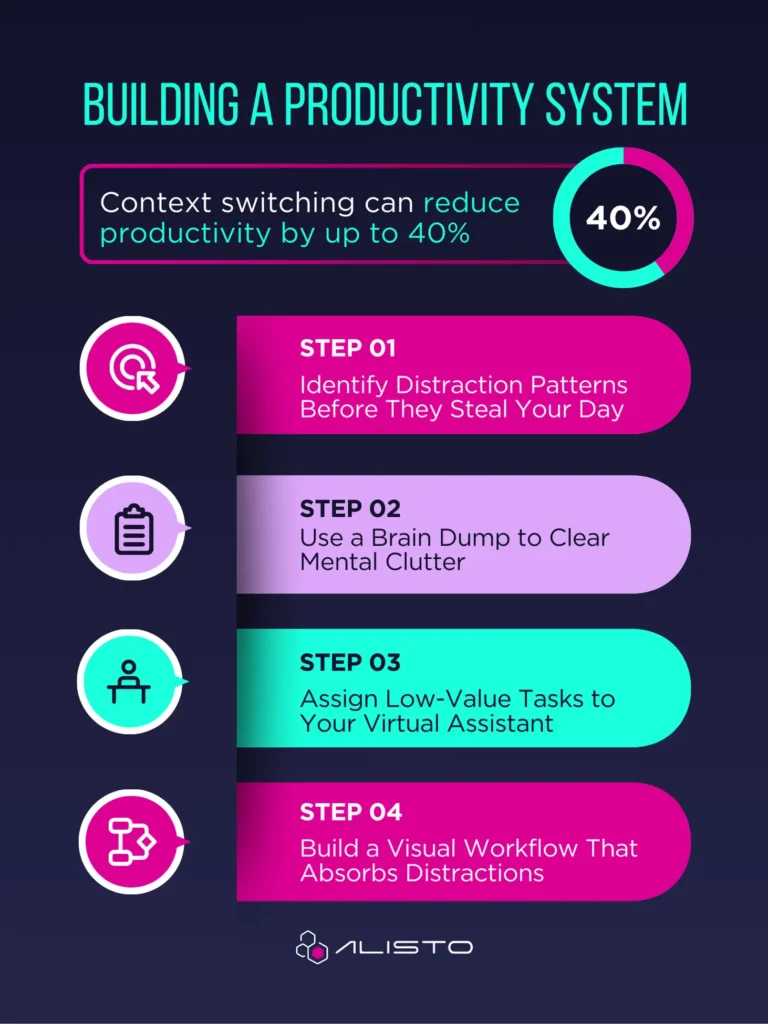
Step 1: Identify Distraction Patterns Before They Steal Your Day
The first step in building a productivity system is awareness.
Track for one to two days:
- Where your attention drifts
- When you feel most scattered
- What you default to when avoiding harder tasks
Common Triggers That Break Focus
You’ll likely see patterns:
- Social platforms like Instagram during mid-afternoon dips
- Energy stalls that trigger web browsing
- Too many open tabs or tool switching
By naming these focus blockers, you create the first layer of defense against them.
Step 2: Use a Brain Dump to Clear Mental Clutter
Once you’ve identified distraction patterns, unload everything clogging your brain. Use a brain dump productivity exercise:
Write down—without filtering—every:
- Micro task
- Idea (half-finished or not)
- Reminder
- “Someday” project
- Decision still sitting in limbo
The 3-D Sort Method: Do, Delegate, Delay
With your distraction map in hand, sort everything into three buckets:
- Do it (if it’s 5 minutes or less and critical)
- Delegate it (to your VA or team)
- Delay it (schedule or move to a “Parking Lot”)
This task management framework clears your mind while creating a system for action.
Step 3: Assign Low-Value Tasks to Your Virtual Assistant

Now comes the leverage point: virtual assistant delegation.
Move repeatable or low-value tasks from your distraction map into a shared board. A simple workflow:
| Workflow |
Purpose |
|
Brain Dump |
Raw, unfiltered thoughts |
|
To Sort |
Needs Do / Delegate / Delay tagging |
|
Founder Focus |
Only tasks you should handle this week |
|
VA Queue |
Tasks your VA can research, prep, or complete |
|
Done |
Record of finished tasks and team wins |
How to Structure a Focus Board for Maximum Clarity
By creating a dedicated focus board, your VA becomes your filter. They manage incoming distractions, leaving only the essential work for you. This clarity frees your time for high-leverage projects.
Step 4: Build a Visual Workflow That Absorbs Distractions
Think of your workflow as a productivity buffer zone—a system that catches distractions before they hit your brain.
Include:
- Drop Zones for ideas, content, and follow-ups
- Review Triggers (e.g., every Thursday review the VA Queue)
- Automation Productivity Tools like tags, deadlines, and energy labels
Automations and Review Triggers That Save Hours Each Week
A well-built workflow runs in the background. Automations handle repetitive steps. Your VA maintains the board. You simply log in and focus on execution.
Final Thoughts: Structure Beats Willpower
Founders don’t need more willpower to manage distractions—they need a sustainable productivity system.
Distractions aren’t going away, but with the right workflow for entrepreneurs, you no longer have to sacrifice clarity for creativity. You just need the structure that absorbs chaos before it reaches you.
Ready to Delegate Your Distractions?
Let us help you transform distraction into clarity. With the Focus Board Setup Package, you’ll:
- Build your distraction board in ClickUp or Trello
- Integrate it into your calendar and daily rituals
- Sort your first brain dump together
- Assign automations and delegate-ready labels
- Keep it maintained weekly
Turn mental clutter into clear action—for you and your VA.