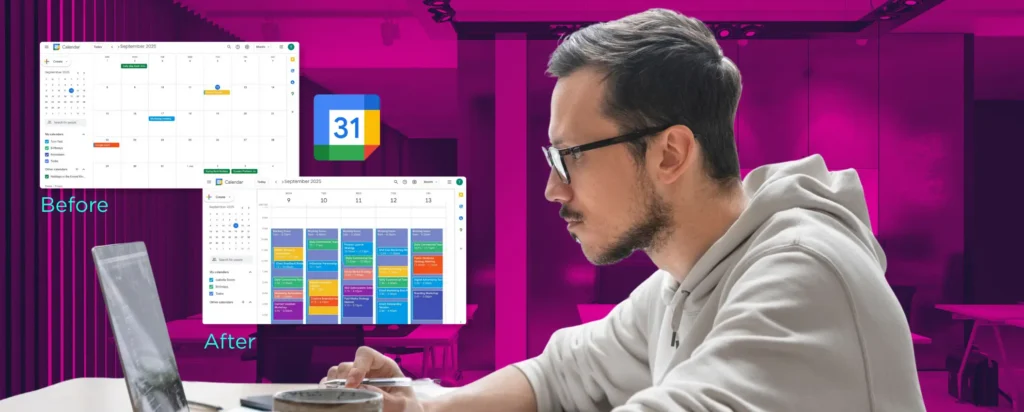
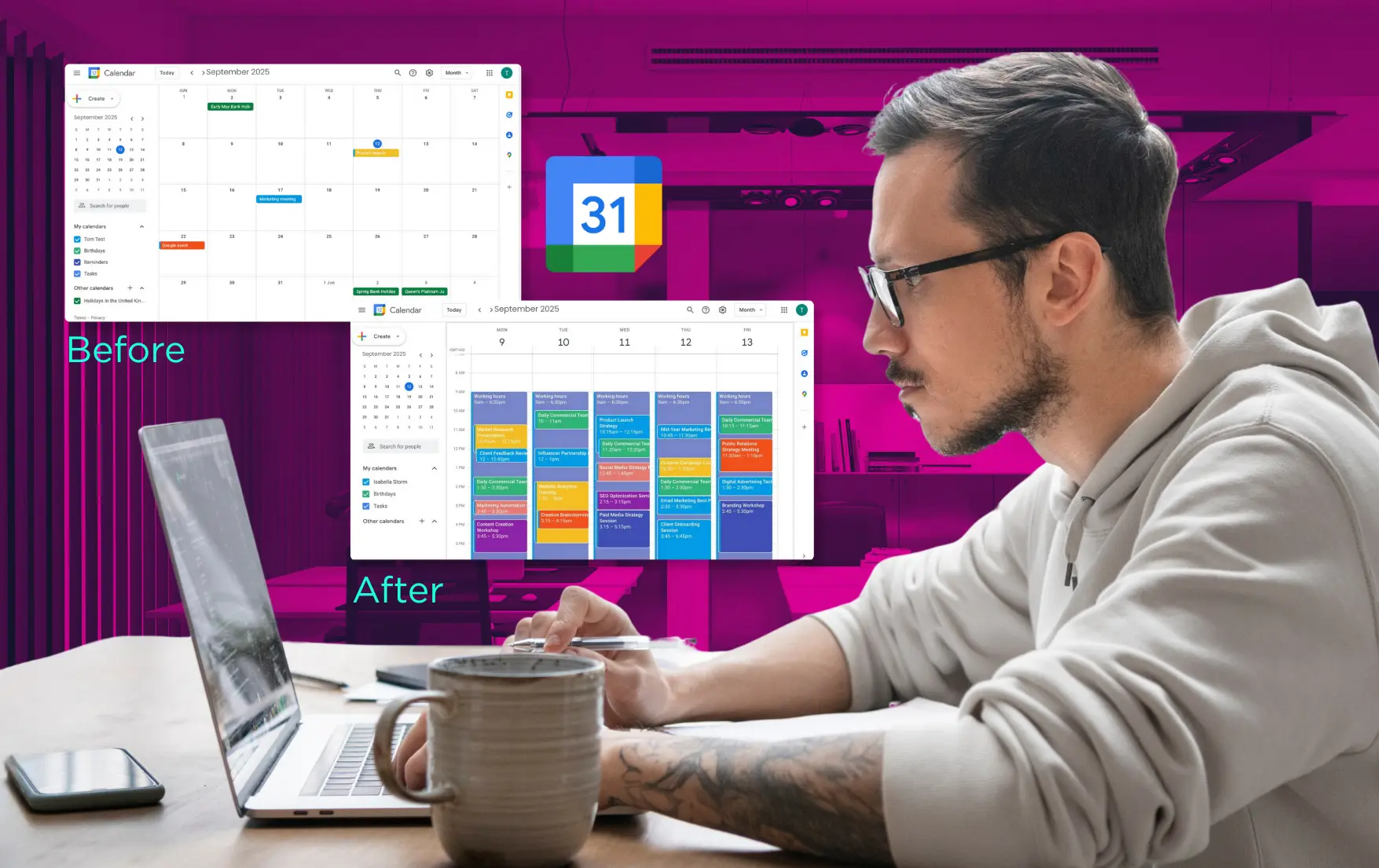
The Overbooked Trap
Back‑to‑back meetings, a swelling inbox, and your “real work” waiting for you at 9 p.m. If that sounds familiar, you’re not alone. Most entrepreneurs build time‑management systems that quietly assume infinite energy and perfect days. Then reality strikes—clients reschedule, kids get sick, fires appear, and your calendar becomes a liability.
The fix isn’t more scheduling. It’s more flexibility. The entrepreneurs who consistently ship high‑value work don’t run tighter calendars; they run systems that adapt when the day does.
Let’s look at why rigid scheduling breaks down, and what to build instead.
Why Rigid Scheduling Fails
Classic time‑management playbooks were designed for predictable days. Entrepreneurship isn’t predictable. You’re solving non‑linear problems, often across multiple roles. When your system relies on everything going “as planned,” one disruption can cascade through the whole day.
Rigid systems snap under pressure. Flexible systems bend and bounce back. The difference is structural: a rigid plan ties outcomes to specific clock times; an adaptive plan ties outcomes to windows, priorities, and energy, so you still move the ball even when the timeline shifts.
So how do you make your schedule flexible without losing momentum?
Build Flexibility into Systems (Without Losing Momentum)
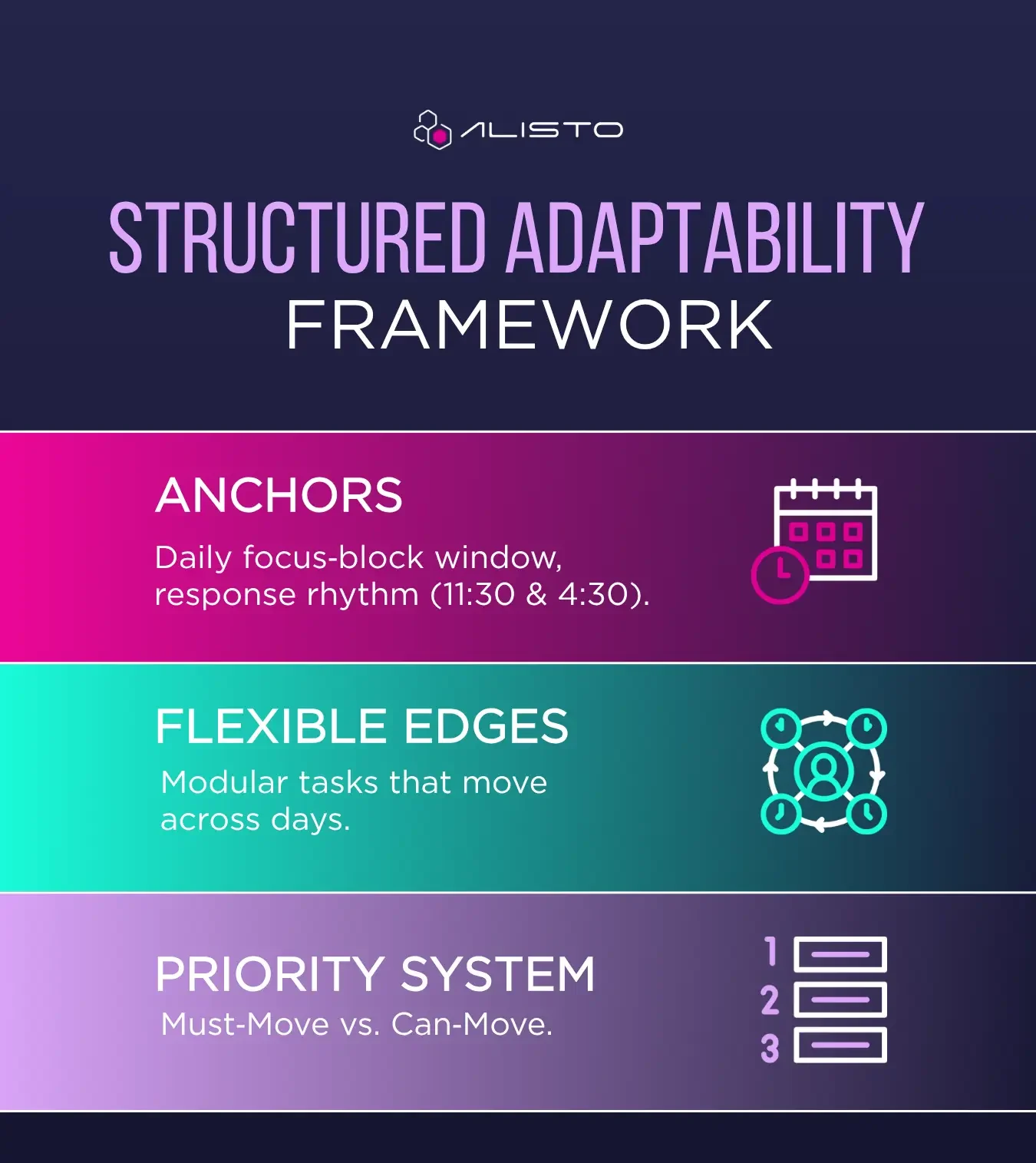
Think structured adaptability: define a few non‑negotiable anchors, then keep flexible edges everywhere else.
- Focus‑block windows (not exact hours). Instead of “deep work 9–11 a.m.,” set a morning window for a 90‑minute focus block. If a call slips, you still have space to run the block later in the window.
- Modular task lists that move. Break projects into modules (draft → revise → finalize). If you miss a block, drag the module forward—no guilt, no derailment.
- Priority‑based, not time‑based, productivity. Rank daily modules as Must‑Move (1–2 items max) and Can‑Move. You’ll still finish the day with progress on what matters, even if everything shifts.
Flexibility isn’t just convenient; it’s evidence‑backed. A six‑month randomized controlled trial on hybrid work found higher job satisfaction and one‑third lower quit rates with no drop in performance—a real‑world win for schedule flexibility and business outcomes (Nature RCT abstract on PubMed). Another rigorous Cochrane review found that employee self‑scheduling improved health and wellbeing markers (sleep, fatigue, mental health), reinforcing that control over time supports sustained performance (Cochrane Review).
Flexible structure is one piece. Protecting your creative time is the other.
Protect Creative Time from Operational Clutter
Deep work is where entrepreneurs create leverage—strategy, vision, product, positioning. But operational noise (email, Slack, quick questions, approvals) hijacks that potential.
- Identify your deep‑work zone. Most founders have a daily 90–120‑minute window of highest clarity. Block it. Treat it like a client.
- Defend it with delegation and automation. Route repeatables to a VA, set rules in your inbox, and use async updates for status—not meetings.
- Reduce interruptions at the source. Batch communications and set a team‑wide “response rhythm” (e.g., 11:30 a.m. and 4:30 p.m. message sweeps).
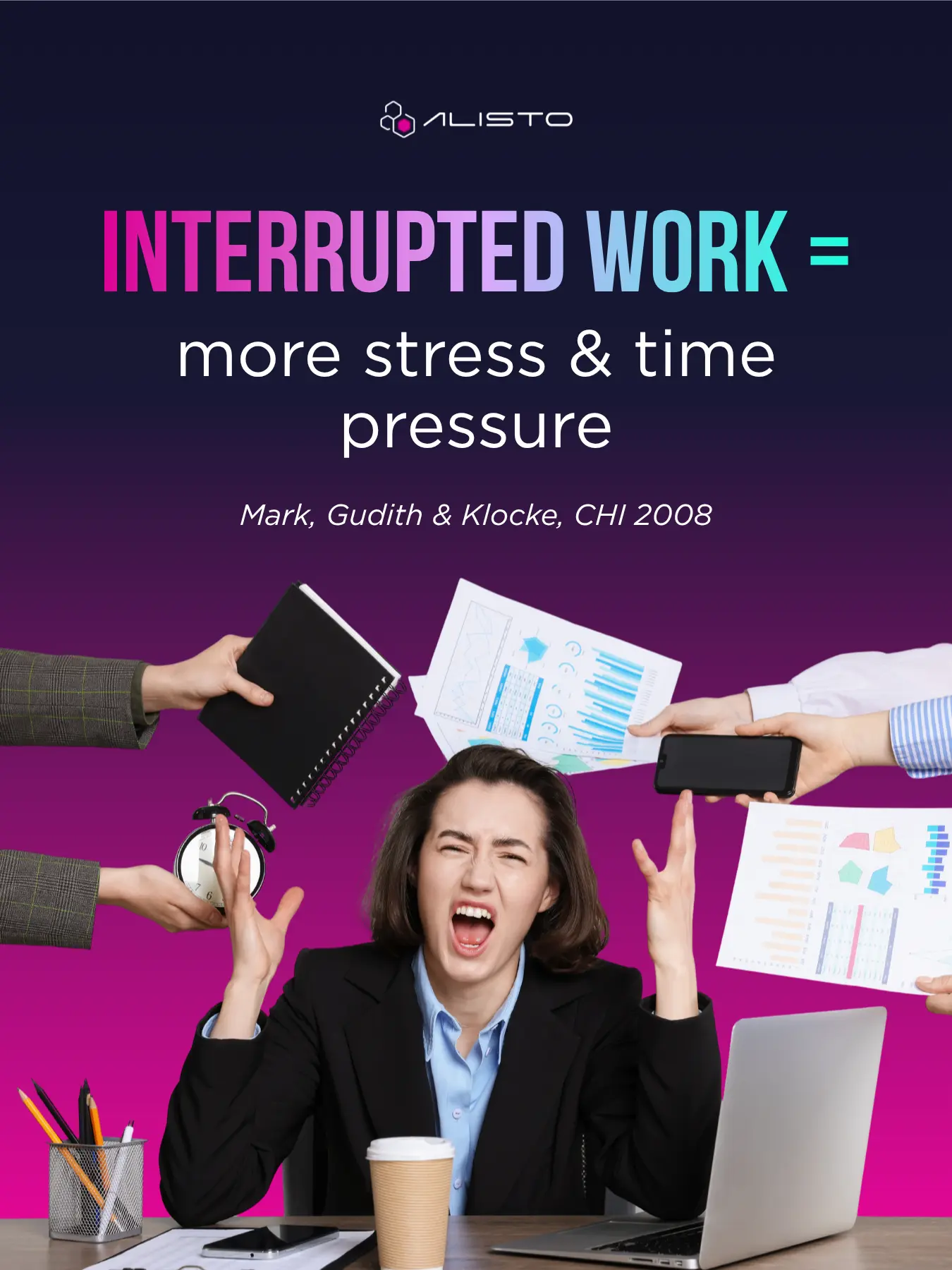
The evidence is clear: interrupted work forces people to speed up—at the cost of more stress, frustration, time pressure, and effort. That’s the finding from a classic CHI study on interruptions in knowledge work (Mark, Gudith & Klocke, 2008, PDF). Protecting uninterrupted focus isn’t indulgent—it’s operational hygiene for creative output.
When leaders model this, teams follow—and performance scales.
The Outcome: Systems That Breathe With You
Sustainable growth comes from structure that flexes:
- Focus blocks that still happen, even when the morning slips.
- Priorities that move forward, even when meetings multiply.
- Creative time that’s protected, even as operations hum.
Flexible systems convert messy days into consistent progress. And when you give teams similar autonomy—flex windows, fewer fixed meetings, clear priorities—you create a culture that’s resilient to real life. The study above shows flexibility does not harm performance while boosting retention; the Cochrane review shows that self‑scheduling supports health—the foundation for repeatable output.
Systems that bend with your humanity last longer than systems that fight it.
Ready to stop overbooking yourself?
Download the 90‑Minute Project Power‑Up—a free guide to building flexible focus systems that work in real life.