

You spent ten hours at your desk, but your to-do list looks untouched.
It’s a familiar feeling. You were “working all day,” but can’t point to anything meaningful you completed. It’s not laziness. It’s a broken belief: that putting in more hours leads to better results.
The truth? It’s not about how long you work. It’s about how well you focus.
That’s where the 90-Minute Rule comes in. It taps into your brain’s natural focus rhythm to help you create momentum and get measurable progress—without burnout.
Why Long Workdays Aren’t Actually Productive
We’re wired to think that time equals output. But science tells a different story. The longer we work in one continuous stretch, the more our mental performance drops.
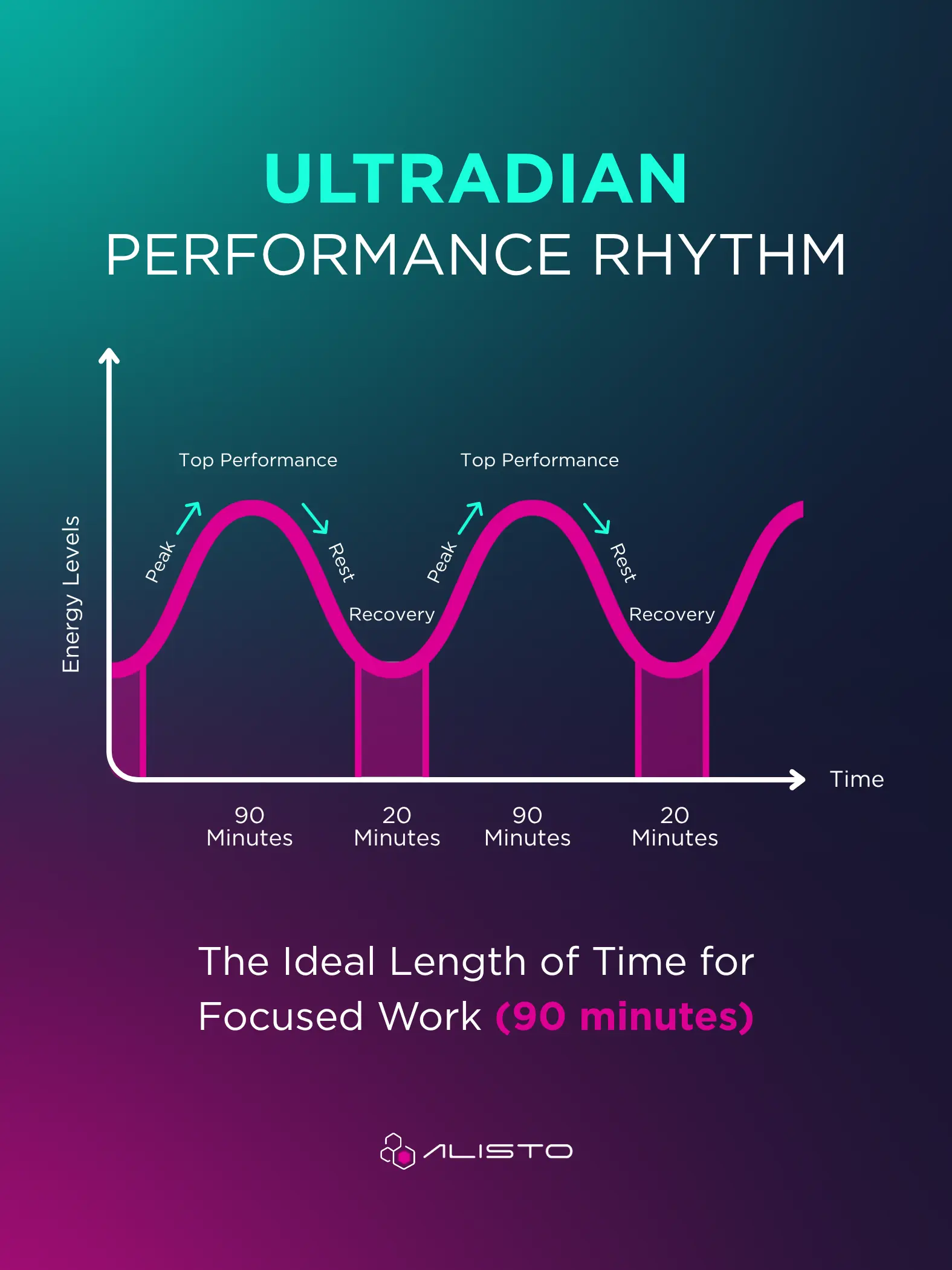
Enter: diminishing returns. After about 90 minutes of deep concentration, our cognitive capacity starts to decline. Focus turns foggy. Creativity dims. Mistakes creep in.
Why? Because the brain operates in ultradian rhythms — 90- to 120-minute cycles of high energy followed by recovery. This concept was first described by sleep researcher Nathaniel Kleitman, considered the father of modern sleep science.
When we ignore this natural rhythm and push through, fatigue sets in. And context switching? It burns even more energy. A study found that it takes 23 minutes and 15 seconds on average to regain focus after a distraction.
In other words: grinding longer doesn’t mean working smarter. It means doing less with more effort.
The 90-Minute Framework for Momentum
Instead of working against your brain, what if you worked with it?
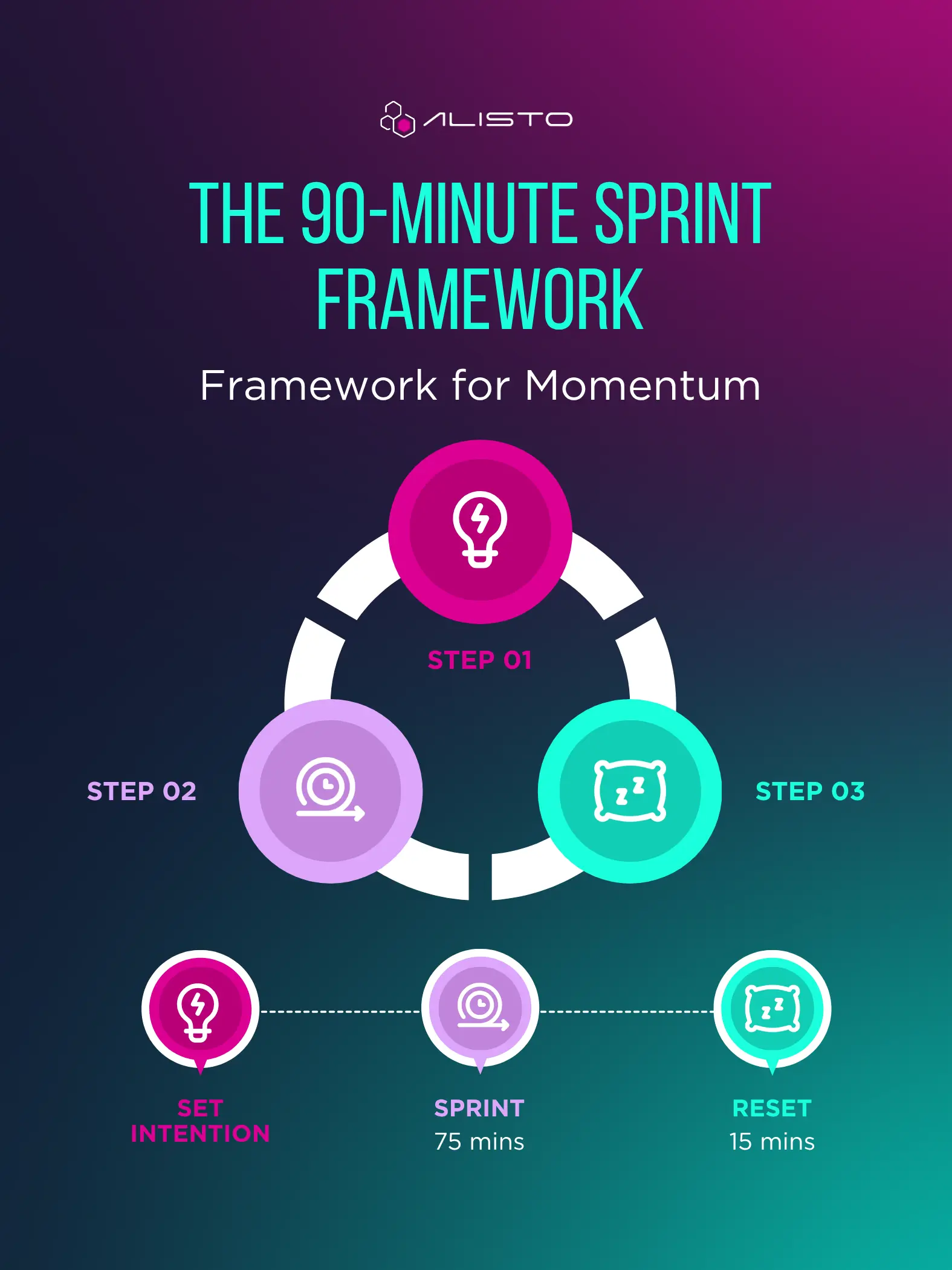
The 90-Minute Rule is simple: three steps that align with your peak focus cycles.
1. Set Intention
Decide exactly what outcome you want from your session. Not a vague “work on presentation,” but a sharp “outline three slides of the pitch deck.”
2. Sprint (75 minutes)
Commit to a deep, focused block of work. No multitasking. No checking messages. Just one objective and one uninterrupted window to do it. According to neuroscientist Andrew Huberman, our brain can sustain deep focus for about 90 minutes when distractions are minimized.
3. Reset (15 minutes)
When the sprint ends, step away. Walk, stretch, hydrate. This recovery helps your brain reset and primes you for the next burst.
The result? Consistency without burnout. Progress without pressure.
Systemize the Sprint
It doesn’t take much to start seeing results. A few systems can make 90-minute sprints part of your team’s weekly rhythm:
- Use a visible timer (digital or analog) during sprints.
- Block calendar time for deep work. Label it clearly.
- Align your team around protected “quiet hours” with no meetings.
- Add a recovery buffer after each focus block.
- Reflect on what worked after each sprint—and improve the next.
For leaders, this isn’t just about individual efficiency—it’s about culture design. Teams that normalize focused work, protect attention, and build in recovery report higher job satisfaction, lower stress, and more predictable creative output.
Ready to Sprint?
If you’re ready to build your week around your natural energy cycles, we’re here to help.
Join us for Your Plan, Your Pace: The T.I.M.E. Workshop, where you’ll learn how to design your days with intention, rhythm, and results.
Because success doesn’t come from working more. It comes from working right.