Energy isn’t the problem. Your rhythm is.
As a founder, it’s tempting to wake up and immediately dive into your inbox—reacting to client messages, team pings, content ideas, and task alerts. But when you never take control, you end the day feeling busy but uncertain about what you actually moved forward. That’s reactive work—when your week runs you instead of the other way around.
At Alisto, we help founders shift from reactive work to a focus rhythm, using systems that align with energy, flow, and clarity. It all starts with structuring your week intentionally.
The Cost of Staying Reactive
Reactive work may feel productive—but over time, it costs you:
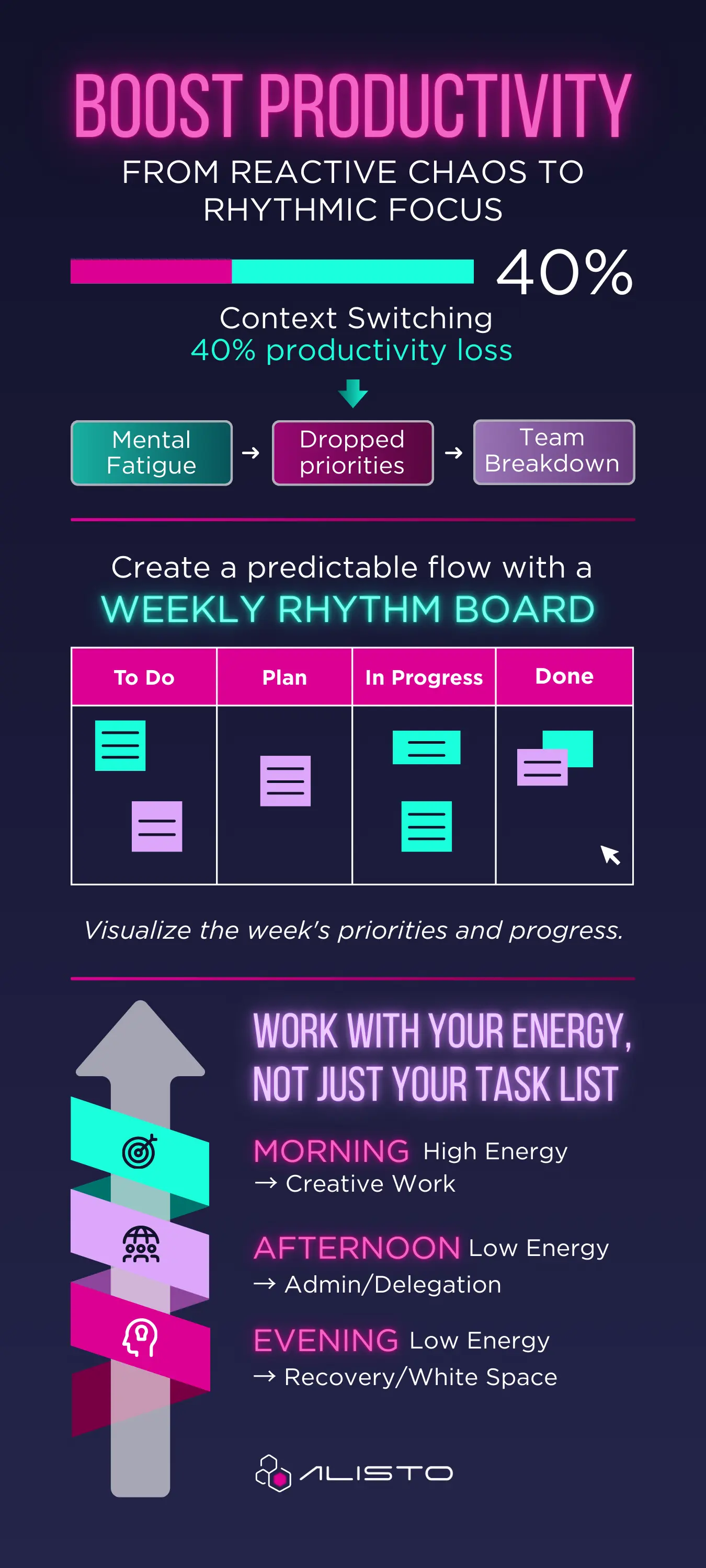
🚨 Constant context switching and mental fatigue
❌ No clarity on priorities, which leads to dropped responsibilities
🔄 Never getting into a rhythm; always restarting
😰 Inconsistent communication with your VA or team
Why? Because when you always respond rather than plan, you allow interruptions to set your pace instead of you setting the pace.
What It Means to Build a Focus Rhythm
A focus rhythm is a weekly structure designed around your natural energy, your top priorities, and the support system you have—not just your calendar. It transforms your week into a predictable, calm flow instead of a chaotic firefighting sprint.
Here’s how we help founders build it.
1. Time Blocking by Energy, Not Task Type
Instead of batching by task categories (like marketing, admin, etc.), block time based on your energy levels:
- High-energy windows for creative, strategic thinking
- Low-energy zones for administrative work or delegation
- Recovery or transition blocks (walks, breaks, mental reset)
Why does this matter? Because structuring your work to align with natural energy cycles leads to better focus and productivity. For example, time blocking helps reduce decision fatigue, improve work-life balance, and reduce stress.
2. Team Pacing & Communication Loops
To support this rhythm, we implement communication and team processes that preserve flow.
For example:
- Monday: Founder updates the priority board
- Tuesday: VA aligns tasks + standard operating procedure (SOP) clarifications
- Wednesday: Mid-week check-in through Loom or asynchronous status updates
- Friday: Review & reset the sprint board together
These loops create rhythm and give everyone visibility—reducing reactive chaos.
Asynchronous communication also plays a big role. Using tools like Loom or async project updates lets the team work without constant interruptions. An article from Forbes confirms that asynchronous communication improves productivity, flexibility, and reduces meeting overload.
3. Tools We Use to Support Rhythmic Workflows
We don’t just teach theory—these are systems that stick. Here are tools we set up for clients, aligned with SEO-friendly systems like “weekly focus board,” “workflow tools,” etc.:
Tool |
What It Supports |
|
ClickUp |
Weekly Focus Board (Founder Focus, VA Queue, Waiting On, Done) |
|
Loom |
Asynchronous updates—no draining, overly frequent meetings |
|
Creates psychological cues/rituals to enter blocks of focus |
You don’t need a complex tech stack. You need tools that talk to each other, support your energy-aligned blocks, and let you think instead of reacting.
4. Build in the Margins (Your Brain Will Thank You)
Even the best systems break if your schedule has no breathing room.
We help clients establish:
- 15-minute buffers between calls
- White space on lighter days (Fridays often work)
- Task overflow or parking zones, so your board doesn’t become a source of stress
- Delegation tags: “Needs Loom,” “Waiting Feedback,” “Founder Review”—so items don’t just stall
When you leave intentional margin, you’re not stressed by what you missed—you have space to handle what arises.
What It Feels Like to Shift from Reactive to Rhythmic
When your week is built around flow instead of urgency, you’ll start seeing and feeling changes:
✅ You wake up knowing exactly where to begin.
✅ Your VA has already made strides by the time you start.
✅ You touch each task once—not five times.
✅ Your board clearly shows momentum.
✅ You feel calmer, because your system carries the load.
You didn’t just get more disciplined—you built a week that supports focus without forcing it.
Ready to Build a Week That Works with Your Brain?
Let Alisto help you build:
- Your Focus Board
- Team communication workflows
- An energy-aligned, rhythmic schedule
📅 Book a Discovery Call — let’s structure your week to follow your flow, not fight it.